
More details
Collapse details
Date Published:
Filesize:
- January 1, 2015
Beaked whales (family Ziphiidae) consist of at least 21 different species in six genera with relatively little known about many of the species. Research on this family of odontocetes has increased in the last two decades as a result of a mass stranding event of beaked whales in the Bahamas in 2000 in association with a U.S. Navy training event. Results of this research have identified echolocation click characteristics for several species from different areas of the world based upon both tag data and passive acoustic monitoring data
- 184.39 KB
More details
Collapse details
Date Published:
Filesize:
- March 1, 2016
A passive-acoustic glider survey was conducted in the Mariana Islands Range Complex (MIRC) between 2 March and 27 April 2015 (data collection period: 6 March–7 April 2015). The goal of the project was to investigate the spatial distribution and temporal occurrence of odontocetes and mysticetes in offshore areas east of the Mariana Islands. The survey was essentially an exploration of offshore areas adjacent to Guam, Rota, Tinian, and Saipan. The areas east of the Mariana Islands are difficult to access and survey, and thus not much is known about the abundance and distribution of cetaceans in these offshore areas. Few dedicated marine mammal surveys have been conducted in these waters to date, and any additional effort improves the understanding and awareness of marine mammal occurrence in MIRC.
- 18,821.67 KB
More details
Collapse details
Date Published:
Filesize:
- October 1, 2015
A passive-acoustic glider survey was conducted in the Hawaii Range Complex (HRC) between 11 December 2014 and 26 January 2015. The goal of the project was to investigate the spatial and temporal distribution of odontocetes and mysticetes in offshore areas south of the Main Hawaiian Islands. The survey was essentially an exploration of offshore seamounts and adjacent abyssal areas.
- 5,370.91 KB
More details
Collapse details
Date Published:
Filesize:
- September 30, 2013
eaked whales (family Ziphiidae) were automatically detected post exercise in recorded acoustic data collected before, during and after a February 2012 U.S. Naval training event at the PMRF, Kauai, Hawaii.
- 1,257.85 KB
U.S. Navy Marine Species Monitoring Annual Meeting, San Diego, California, April 2022 .
More details
Collapse details
Dive characteristics of Cross Seamount beaked whales from long-term passive acoustic monitoring at the Pacific Missile Range Facility, Kauaʻi.
Marine Mammal Science. 2022.
39(1):22-41
More details
Collapse details
Date Published:
Publication:Ocean:Region:Species:Methods:
- July 28, 2022
Beaked whale foraging pulses were detected on the Pacific Missile Range Facility (PMRF) off Kauaʻi, Hawaiʻi, via long term passive acoustic monitoring. The unidentified pulses do not match foraging pulses of known species on the range but are similar to the unidentified beaked whale first detected at Cross Seamount, Hawaiʻi. Although there has not been a visual confirmation of the unidentified beaked whale species, analysis of data collected from 2007 to 2019 has identified beaked whale foraging dive characteristics from echolocation pulses.
Dive characteristics of Cross Seamount beaked whales from long-term passive acoustic monitoring at the Pacific Missile Range Facility, Kauaʻi.
Marine Mammal Science. 2023.
39(1):22–41
More details
Collapse details
Date Published:
Publication:Ocean:Region:Species:Methods:
- January 1, 2023
Beaked whale foraging pulses were detected on the Pacific Missile Range Facility (PMRF) off Kauaʻi, Hawaiʻi, via long term passive acoustic monitoring. The unidentified pulses do not match foraging pulses of known species on the range but are similar to the unidentified beaked whale first detected at Cross Seamount, Hawaiʻi. Although there has not been a visual confirmation of the unidentified beaked whale species, analysis of data collected from 2007 to 2019 has identified beaked whale foraging dive characteristics from echolocation pulses.
More details
Collapse details
Date Published:
Filesize:
- March 1, 2022
This report documents Naval Information Warfare Center (NIWC) Pacific marine mammal monitoring efforts in fiscal year (FY) 2021 for Commander, Pacific Fleet (COMPACFLT) at the Pacific Missile Range Facility (PMRF), Kaua‘i, Hawai‘i.
- 8,971.43 KB
More details
Collapse details
Date Published:
Filesize:
- September 1, 2021
This report documents Naval Information Warfare Center Pacific (NIWC Pacific) marine mammal monitoring efforts in fiscal year (FY) 2020 for Commander, Pacific Fleet (COMPACFLT) at the Pacific Missile Range Facility (PMRF), Kauai, Hawaii.
- 5,007.00 KB
More details
Collapse details
Date Published:
Filesize:
- March 20, 2020
This report documents Naval Information Warfare Center Pacific (NIWC Pacific) marine mammal monitoring efforts in fiscal year (FY) 2019 for Commander, Pacific Fleet (COMPACFLT) at the Pacific Missile Range Facility (PMRF), Kauai, Hawaii.
- 8,708.37 KB
More details
Collapse details
Date Published:
Filesize:
- July 1, 2025
This report documents the Naval Information Warfare Center (NIWC) Pacific Whale Acoustic Reconnaissance Project (WARP) Laboratory’s marine mammal monitoring efforts in fiscal year (FY) 2024 for Commander, Pacific Fleet (COMPACFLT) at the Pacific Missile Range Facility (PMRF), Kaua‘i, Hawai‘i.
- 6,328.43 KB
More details
Collapse details
Date Published:
Filesize:
- September 9, 2024
This report documents the Naval Information Warfare Center (NIWC) Pacific Whale Acoustic Reconnaissance Project (WARP) Laboratory’s marine mammal monitoring efforts in fiscal year (FY) 2023 for Commander, Pacific Fleet (COMPACFLT) at the Pacific Missile Range Facility (PMRF), Kaua‘i, Hawai‘i.
- 10,102.05 KB
More details
Collapse details
Date Published:
Filesize:
- April 1, 2023
This report documents Naval Information Warfare Center Pacific (NIWC Pacific) marine mammal monitoring efforts in fiscal year (FY) 2022 for Commander, Pacific Fleet (COMPACFLT) at the Pacific Missile Range Facility (PMRF), Kaua'i, Hawai
- 6,631.24 KB
Geographic distribution of the Cross Seamount beaked whale based on acoustic detections.
Marine Mammal Science. 2024.
40(1):164–183
More details
Collapse details
Date Published:
Publication:Ocean:Region:Species:Methods:
- January 1, 2024
Beaked whales produce frequency-modulated echolocation pulses that appear to be species-specific, allowing passive acoustic monitoring to play a role in understanding spatio-temporal patterns. The Cross Seamount beaked whale is known only from its unique echolocation signal (BWC) with no confirmed species identification. This beaked whale spans the Pacific Ocean from the Mariana Archipelago to Baja California, Mexico, south to the equator, but only as far north as latitude 29°N. Within these warm waters, 92% of BWC detections occurred at night, 6% during crepuscular periods, and only 2% during daylight hours.
Complete
Acoustic Monitoring and Evaluation of Tursiops Response to MINEX Training activities
Project Objectives
Assess ocurrence of Tursiops in the vicinity of the W-50 MINEX range. Assess vocal response of Tursiops to underwater explosions
Complete
Assessment of Marine Mammal Vocal Response to Sonar
Project Objectives
Develop analytic methods to evaluate the vocal response of odontocetes and mysticetes to sonar from navy training activities
Complete
Bottlenose Dolphin Occurrence in Estuarine and Coastal Waters near Panama City, Florida
Project Objectives
Determine species occurrence, and distribution, habitat use, and abundance of Tursiops in St. Andrew Bay and coastal waters adjacent to the Naval Surface Warfare Center, Panama City Division.
Current
Estimation of Received Levels of MFAS and Behavioral Response of Marine Mammals at PMRF
Project Objectives
Further our understanding of the Monitoring Questions: 1) What is the occurrence and estimated received levels of MFAS on 'blackfish', humpback, minke, sperm and Blainville's beaked whales within the PMRF instrumented range? and 2) What, if any, are the short term behavioral responses of 'blackfish,' humpback, minke, sperm and Blainville's beaked whales when exposed to MFAS/explosions at different levels/conditions at PMRF?
Complete
Guam Shore Based Visual Surveys
Project Objectives
Shore-based marine mammal surveys
Current
Jacksonville Shallow Water Training Range Vessel Surveys and M3R Species Verifications
Project Objectives
Monitor species composition and distribution on JSWTR, support M3R species verifications
Current
Marine Mammal Sightings During CalCOFI Cruises
Project Objectives
Determine what species and populations of marine mammals are present in Southern California and estimate the abundance and density across seasons
Current
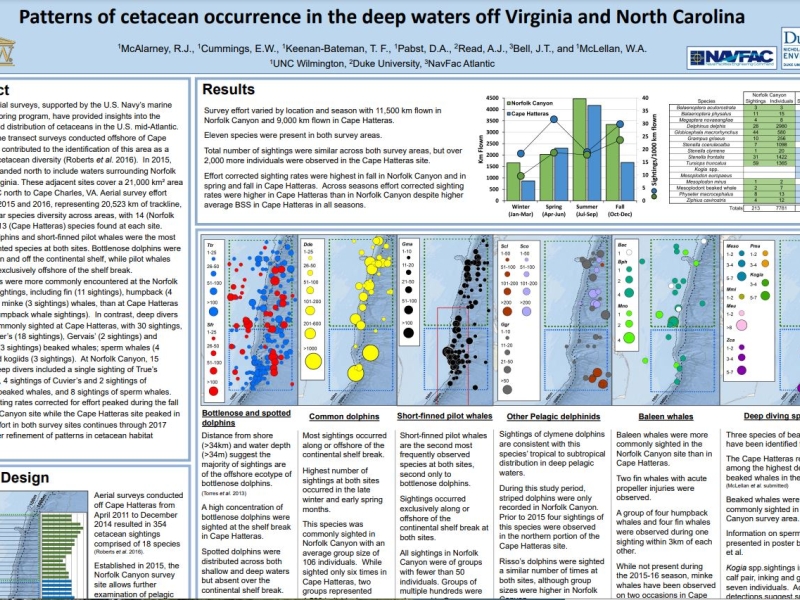
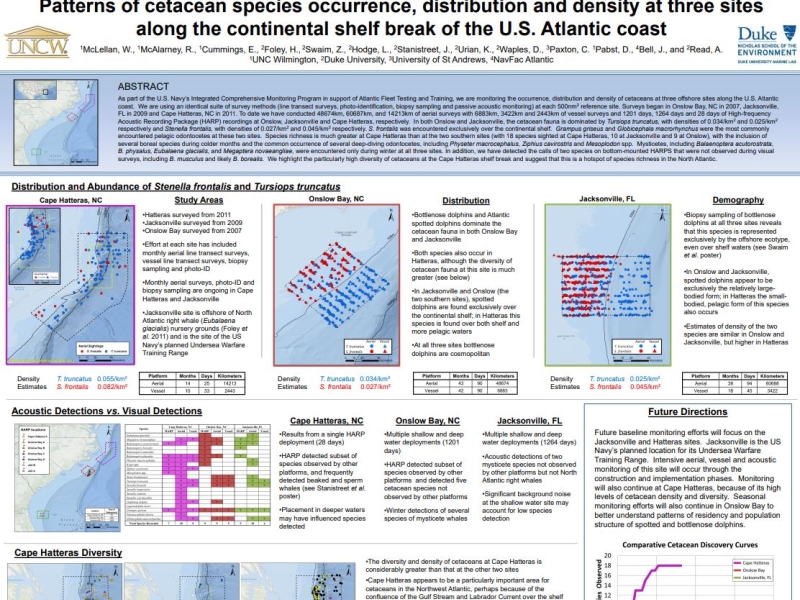
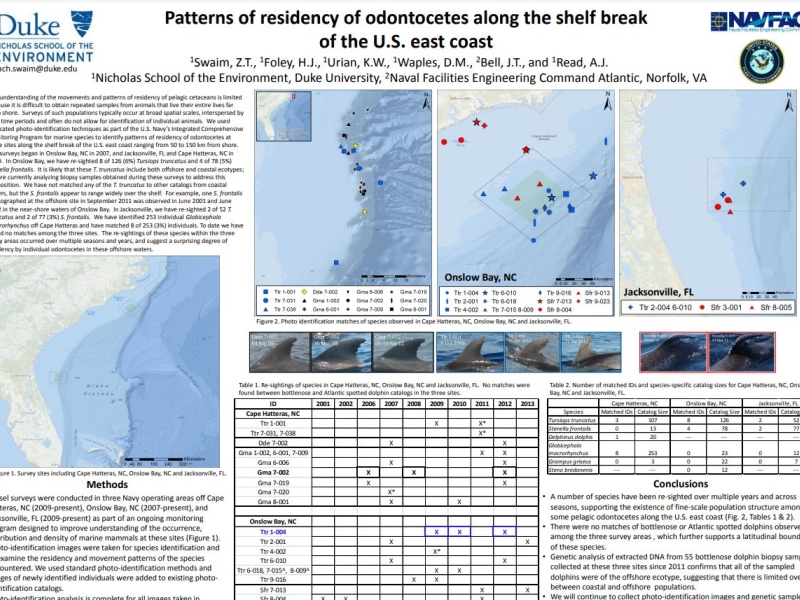
Mid-Atlantic Offshore Cetacean Study
Project Objectives
Assess occurrence, habitat use, and baseline behavior of cetaceans in the offshore and continental shelf break region of the VACAPES OPAREA
Complete
NAS Patuxent River Marine Species Surveys
Project Objectives
Assess occurrence, seasonality, and abundance of Tursiops in the waters near NAS PAX River
Complete
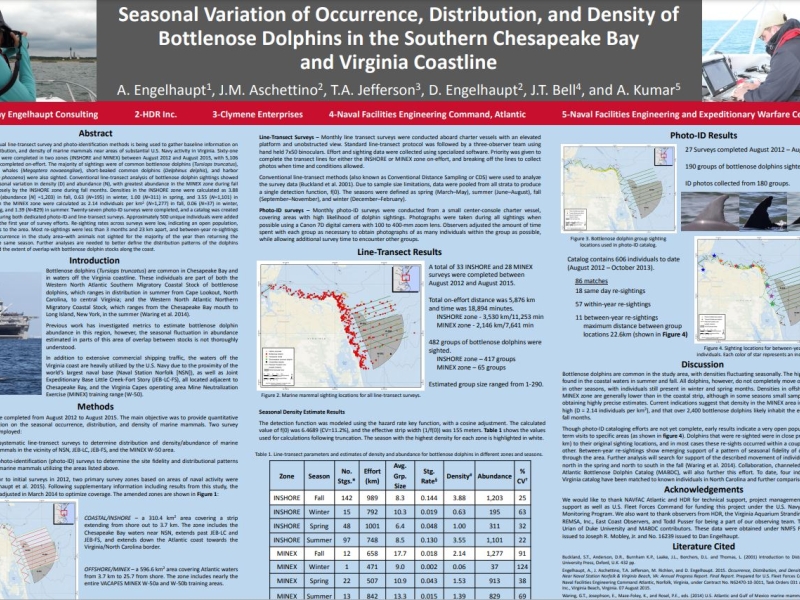
Occurrence, Distribution, and Density of Marine Mammals Near Naval Station Norfolk and Virginia Beach
Project Objectives
Assess occurrence, seasonality, and abundance of Tursiops in the coastal waters of Hampton Roads military installations
Complete
Occurrence, Ecology, and Behavior of Deep-diving Odontocetes
Project Objectives
Establish behavioral baseline and foraging ecology. Assess behavioral response to acoustic stimuli and Navy training activities
Current
Pacific Islands Comprehensive Stranding Investigations
Project Objectives
Conduct comprehensive investigations of stranded marine mammals throughout the Pacific Islands with emphasis on the Hawaiian and Mariana Island chains. This includes conducting necropsies of stranded animals, collecting and archiving samples, conducting disease screening, genetic testing, and analysis of historical data. The objective is to examine stranding patterns and causes of death for marine mammals in the Pacific Islands.
Complete
Pacific Islands Marine Mammal Stranding Diseases
Project Objectives
Determine cause of death when cetaceans strand to ensure accurate public understanding of stranding cause, with focus on infectious diseases
Current
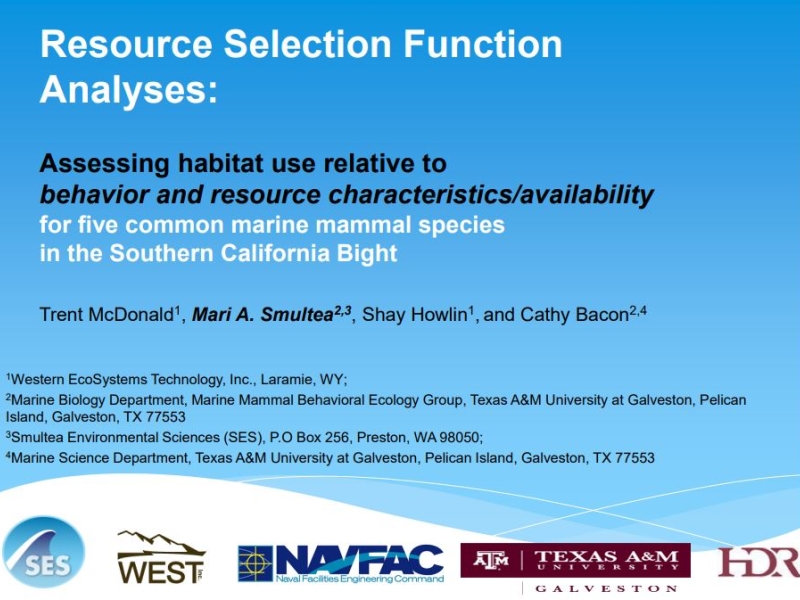
Pacific Marine Assessment Program for Protected Species (PACMAPPS) survey
Project Objectives
Identify species of beaked whales, odontocetes, and baleen whales that occur in the surveyed areas; Monitor marine mammal and sea turtle presence, distribution, and diversity in offshore waters; Develop a better understanding of marine mammal distribution, movement patterns, habitat use, population structure, and abundance; Develop reference library of visually-validated acoustic recordings of marine mammals.
Complete
Small vessel visual surveys in the Mariana Islands Range Complex
Project Objectives
Identify species of beaked whales, odontocetes, and baleen whales that occur in the Mariana Islands; Monitor marine mammal and sea turtle presence, distribution, and diversity in nearshore waters during key seasons (summer and winter); Develop a better understanding of marine mammal distribution, movement patterns, habitat use, population structure, and abundance; Develop reference library of visually-validated acoustic recordings of marine mammals.
Current
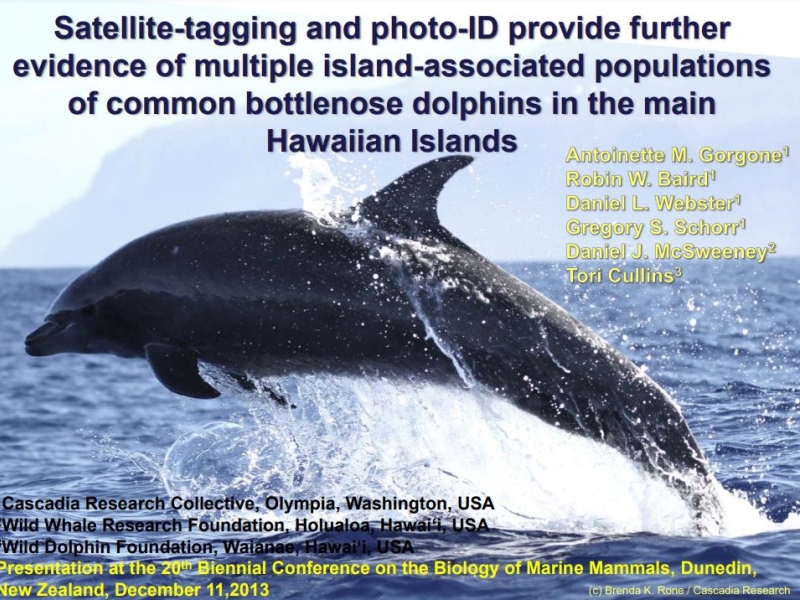
Visual Survey and Tagging of Hawaiian Odontocetes
Project Objectives
(1) define the spatial movement and habitat use patterns of species that are exposed to mid-frequency active (MFA) sonar (2) determine how these patterns influence exposure and potential responses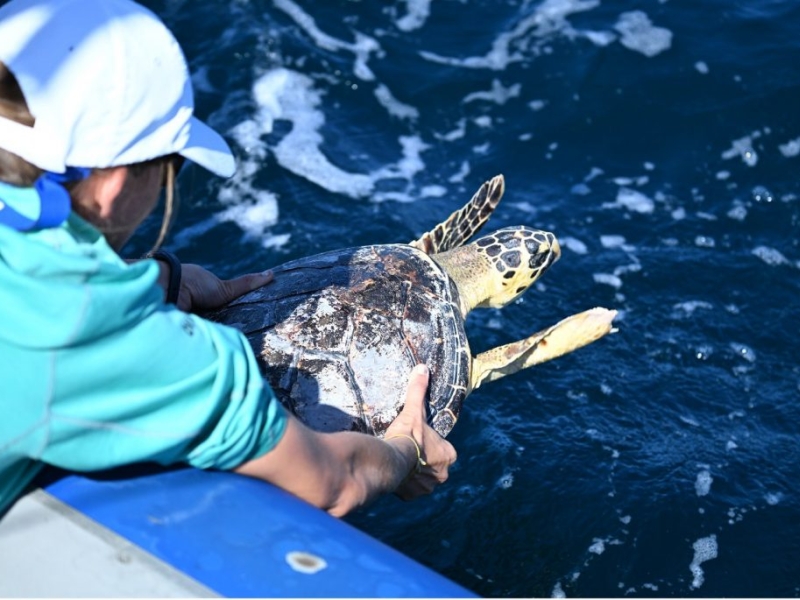
First Satellite Tag Deployments for Atlantic BRS 2024
July 8, 2024
In June 2024, a Duke University team initiated the Atlantic Behavioral Response Study (BRS) by deploying satellite-linked dive recorders on goose-beaked whales (Cuvier's beaked whales) off the coast of North Carolina. These tags collect data on the whales' diving behavior and locations, enhancing understanding of their baseline activities. Additionally, the team released a rehabilitated hawksbill sea turtle named Bagheera back into the Atlantic Ocean.
Whales of Summer
June 10, 2024
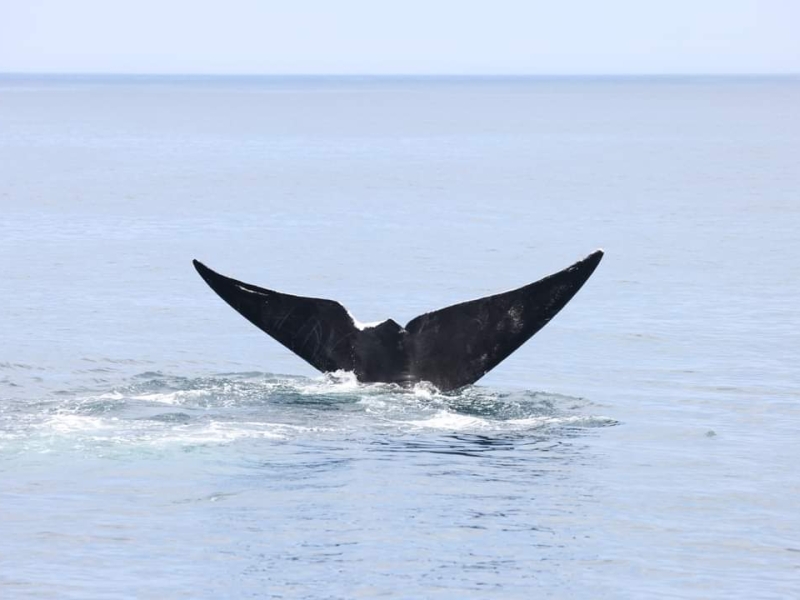
In the mid-Atlantic, baleen whale sightings typically occur during the colder months, with peak activity in December and January. Sightings of humpback and right whales usually decrease by late March through April. While occasional baleen whale sightings, particularly of fin whales, happen during warmer months, large groups are uncommon as summer approaches. Pelagic surveys during this time often focus on odontocetes like sperm whales and beaked whales.
Kauai' Field Work Updates
February 16, 2024
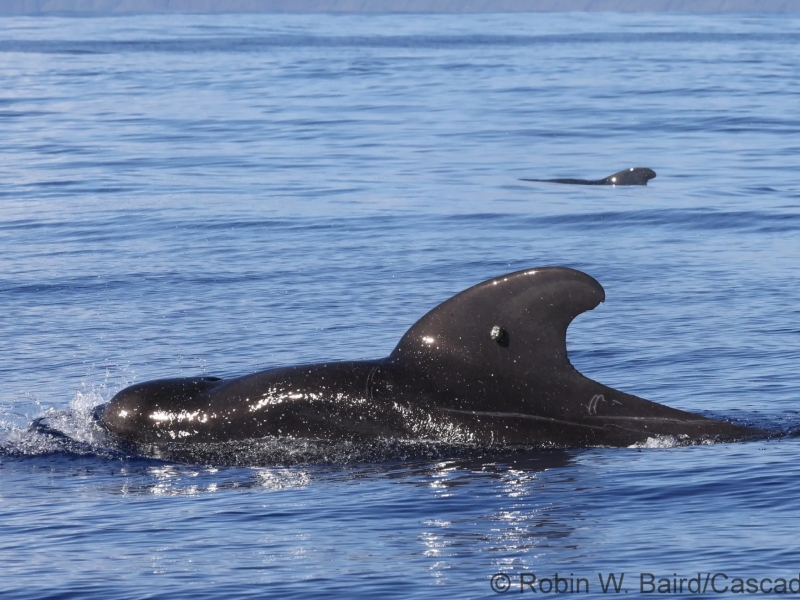
Scientists from Cascadia Research Collective are leading a ~9-day field project off Kaua’i that started on February 11th.
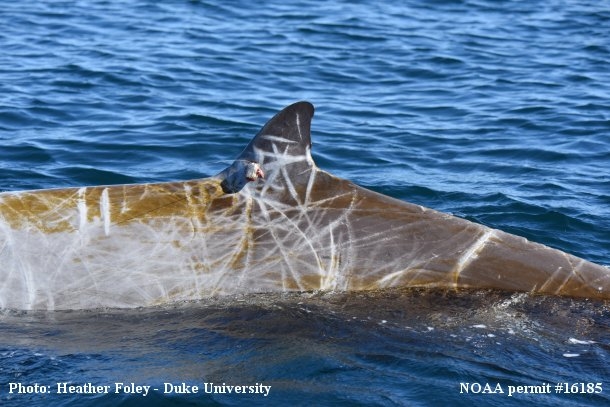
Hatteras tagging wraps up for 2015
November 10, 2015
The finale of a successful field season.
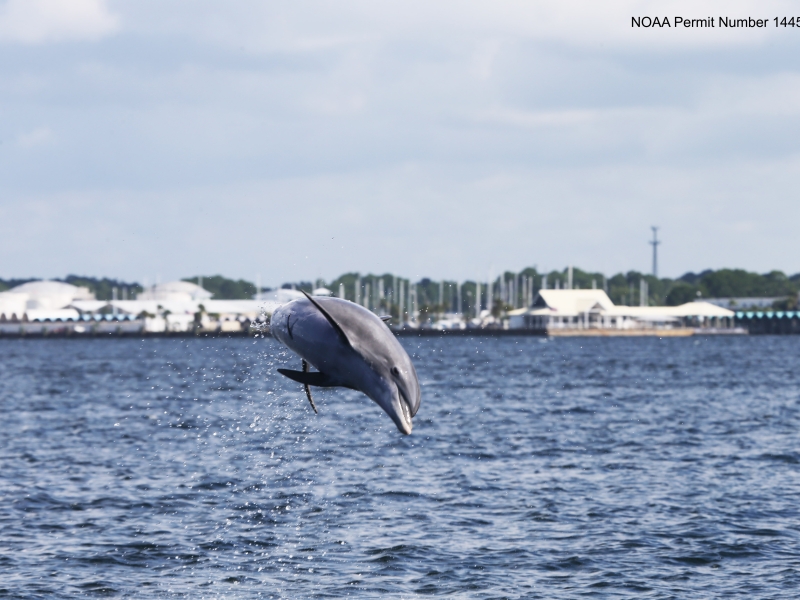
Panama City Dolphin Survey Complete!
August 12, 2015
Bottlenose dolphin photo ID efforts in Florida
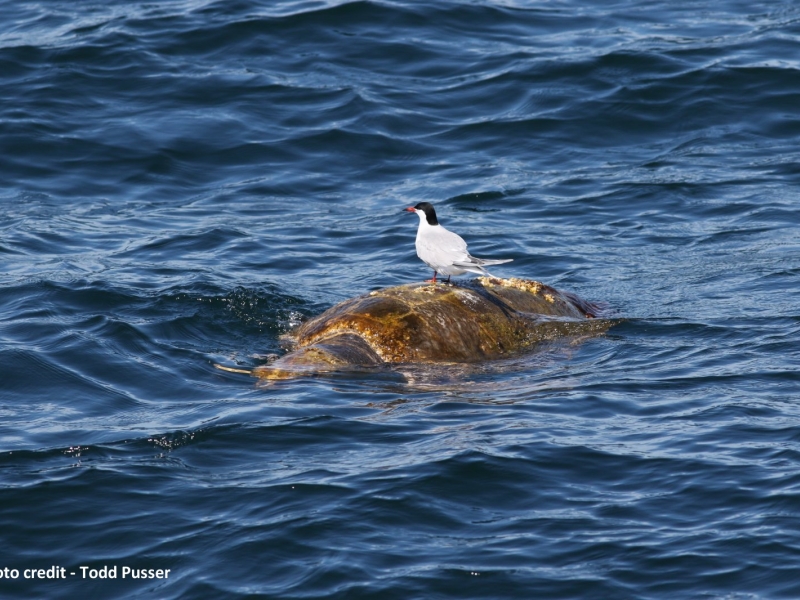
Great Day for a Mid-Atlantic Offshore Survey
April 20, 2015
Pelagic cetaceans and sea turtle sightings.
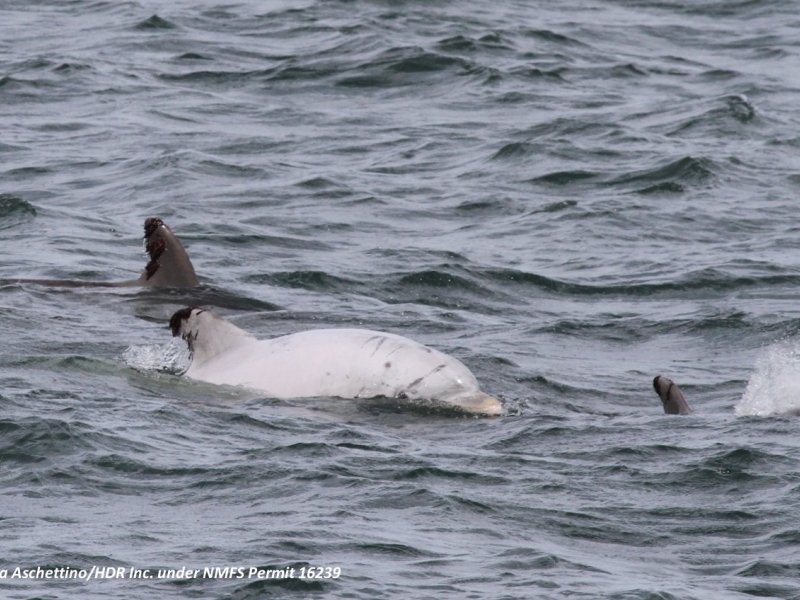
White “Leucistic” Bottlenose Dolphin Seen on Marine Mammal Survey
October 30, 2014
Leucism, like albinism, is a genetic condition that results in a lack of pigmentation in the skin.
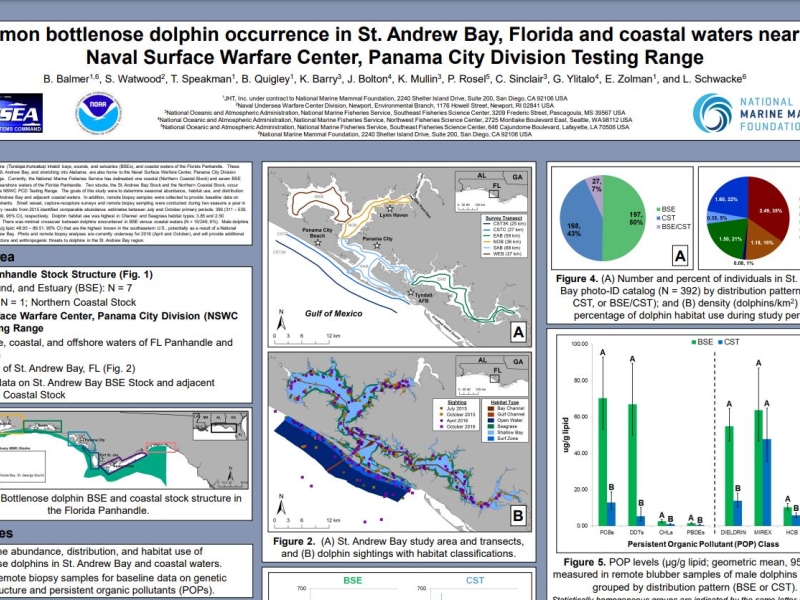
The goals of this study were to determine seasonal abundance, habitat use, and distribution patterns of dolphins in St. Andrew Bay and adjacent coastal waters.
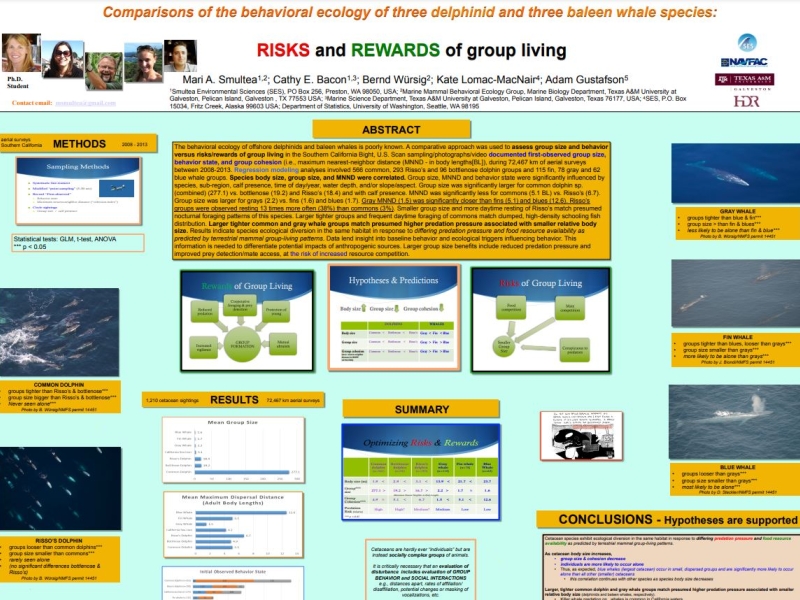
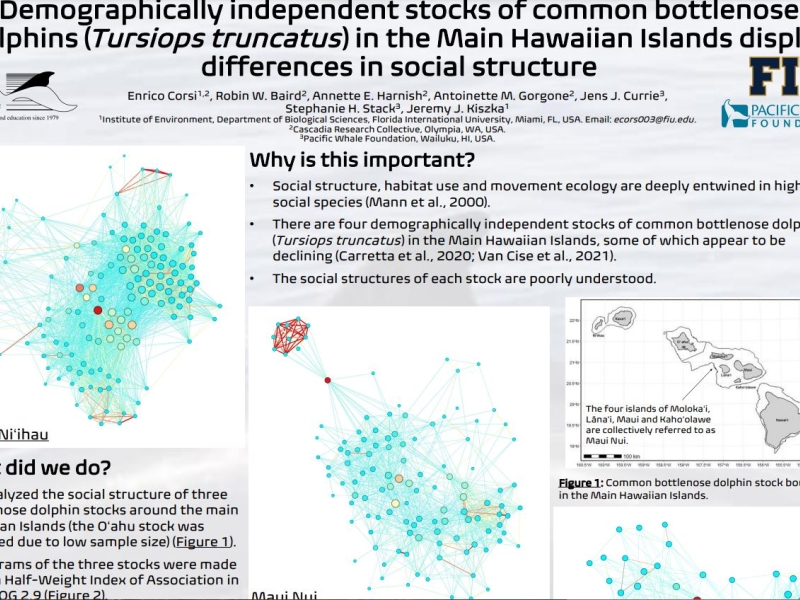
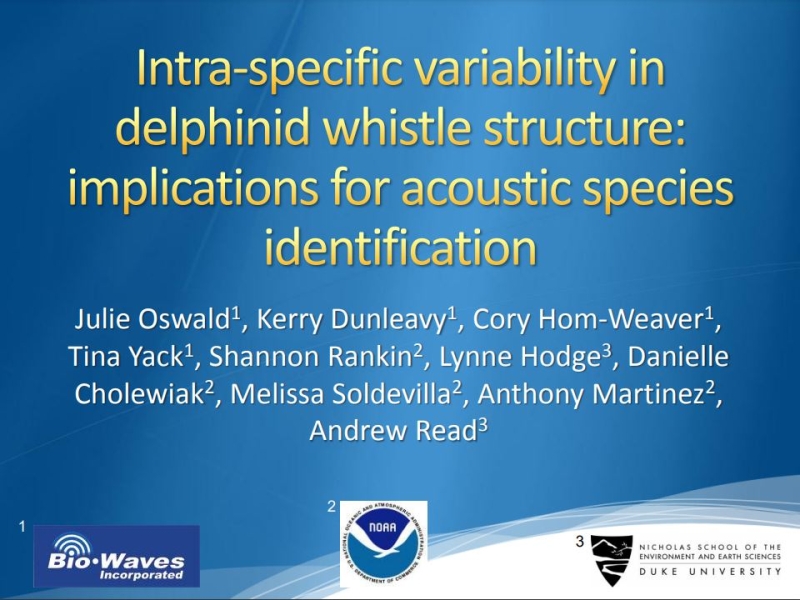

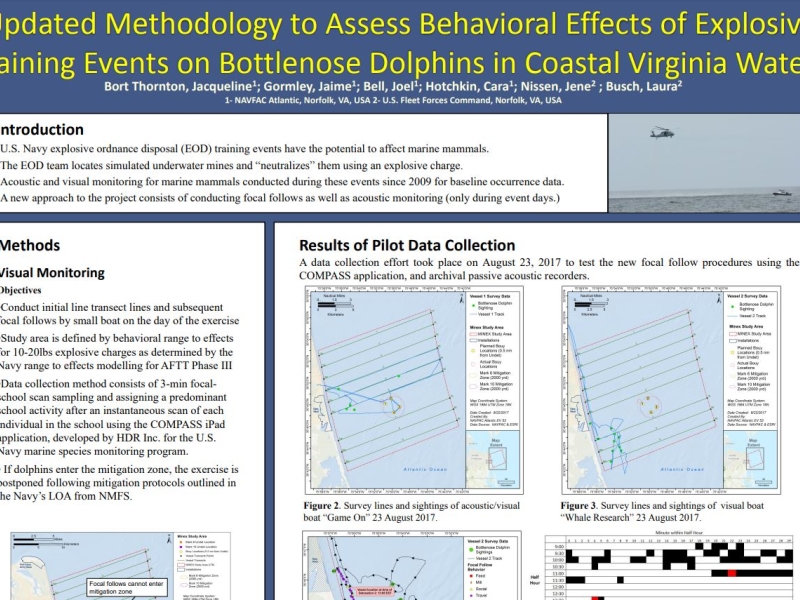
U.S. Navy explosive ordnance disposal (EOD) training events have the potential to affect marine mammals. The EOD team locates simulated underwater mines and “neutralizes” them using an explosive charge. Acoustic and visual monitoring for marine…
